

















Get In Touch
Contact Us Today for a
Comprehensive Analysis and Strategy Session.
Ready to level up your online game? Call (844) 200-6112 or dive into the form below.
Embrace the future of collaboration with OmniFunnel's Oculus 2 VR headset offer for valued clients. It's your entry into immersive VR meetings in the metaverse, redefining digital meetings and shaping virtual collaboration in the realm of web3.
When economic headwinds emerge, marketing budgets become the first casualty in boardrooms across the country. It's an instinctive reaction—cut spending, preserve cash, wait for better times. Yet decades of research reveals this defensive posture as one of the most costly strategic mistakes a business can make. According to Harvard Business Review's multi-year study tracking 4,700 publicly traded companies through three global recessions, only 9% of businesses managed to grow through downturns—and they shared one common trait: they maintained or increased strategic marketing investments while competitors retreated.
Economic uncertainty doesn't eliminate market demand; it redistributes it. Consumer needs persist, but purchasing behaviors shift, decision-making timelines extend, and trust becomes the ultimate currency. For businesses armed with data-driven strategies and the courage to maintain visibility, recessions represent unprecedented opportunities to capture market share at significantly reduced costs. When your competitors go dark, your brand becomes the beacon that guides customers through uncertainty.
This guide provides a comprehensive framework for not just surviving economic downturns but emerging stronger, supported by rigorous performance data, predictive analytics, and proven optimization methodologies that protect ROI while positioning your brand for accelerated growth when markets recover.

The evidence is overwhelming and consistent across multiple economic cycles. McKinsey's landmark study "Learning to Love Recessions" analyzed nearly 1,000 U.S. companies over an 18-year period spanning multiple economic contractions. The finding was unambiguous: companies that "traded lower short-term profitability for long-term gain" by maintaining or increasing marketing spend as a percentage of sales during recessions significantly outperformed peers who cut budgets aggressively.
Harvard's research paints an even starker picture of the stakes involved. Of the 4,700 companies studied through three recessions, 17% didn't survive, and 80% were still struggling to regain pre-recession performance levels three years after economic recovery began. The 9% who thrived didn't simply maintain operations—they strategically invested in marketing, research and development, and operational efficiency while competitors were paralyzed by cost-cutting.
Analytic Partners quantified the ROI advantage, finding that brands increasing advertising spend during previous recessions saw an average 17% higher return on investment compared to maintaining static budgets. More dramatically, research from McGraw-Hill revealed that businesses maintaining advertising during the 1981 recession experienced 256% higher sales by 1985 than competitors who reduced marketing expenditures.
Cutting marketing doesn't pause your brand—it reverses it. Kantar's analysis during the COVID-19 pandemic demonstrated that brands going dark for just six months risked losing up to 39% of brand awareness, with 60% experiencing measurable declines across critical brand health metrics including consideration, preference, and purchase intent.
According to research highlighted by HubSpot's comprehensive recession marketing analysis, when competitors reduce spending, continuing marketers can triple their share of voice without increasing absolute spend. This creates a golden window where marketing efficiency skyrockets—your messages reach audiences with dramatically reduced competitive noise, driving higher engagement rates and lower customer acquisition costs.
As of early 2025, economic forecasts from Goldman Sachs and J.P. Morgan estimate a 45% to 60% probability of recession, while the IMF's World Economic Outlook projects global growth declining to 2.8% in 2025—a downward revision of 0.8 percentage points driven by tariff increases and policy uncertainty.
The Interactive Advertising Bureau's March 2025 survey reveals that 94% of U.S. advertisers express concern about economic impacts, with 45% planning budget reductions. Over 60% anticipate cuts of 6-10%, while 22% are preparing for reductions up to 20%. eMarketer has revised 2025 U.S. ad spending growth downward to 6.3% from 7.5%, including a $10 billion reduction in social media advertising.
Yet despite economic headwinds, HubSpot's 2025 State of Marketing Report found that 92% of marketers plan to maintain or increase brand awareness investments, recognizing that visibility during uncertainty is not optional—it's existential. This demonstrates a fundamental shift in marketing leadership's understanding of recession dynamics based on historical evidence.
Not all consumers react identically to economic pressure. Harvard researchers Quelch and Jocz identified four distinct behavioral segments that emerge during downturns, each requiring tailored messaging and value propositions.

Slam-on-the-Brakes (approximately 15-20%): This segment feels most vulnerable—facing job loss, significant income reduction, or asset devaluation. They reduce spending across all categories, prioritizing absolute necessities and postponing discretionary purchases indefinitely. Marketing to this segment requires extreme value messaging, payment flexibility, and reassurance around essential benefits.
Pained-but-Patient (35-40%): The largest segment economizes selectively across spending categories but less aggressively than the first group. They remain open to purchases that deliver clear, demonstrable value or solve pressing problems. This segment responds to messaging that acknowledges their concerns while demonstrating ROI, durability, and long-term value.
Comfortably Well-Off (20-25%): These consumers feel confident about their financial resilience and maintain near-normal spending patterns with minor adjustments. They represent significant opportunity during recessions, as reduced competition for their attention makes acquisition more efficient. Quality, innovation, and experience-focused messaging resonates with this segment.
Live-for-Today (10-15%): This segment maintains spending patterns regardless of economic conditions, prioritizing current enjoyment and quality of life. While smallest in size, they represent consistent revenue during uncertainty and respond to aspirational, lifestyle-focused marketing.
During economic uncertainty, average purchase consideration periods extend by 30-50% as consumers engage in more extensive research, comparison shopping, and validation before committing. This doesn't reduce demand—it increases the importance of consistent touchpoints throughout extended buyer journeys.
Risk aversion intensifies, making brand familiarity and trust paramount. Consumers gravitate toward known entities that provide perceived safety and reliability. This trust premium explains why established brands that maintain visibility during recessions consistently outperform lesser-known competitors, even at higher price points.
Economic pressure eliminates tolerance for vanity metrics and inefficient spending. According to research on data-driven budget allocation, successful organizations pivot to rigorous performance-based frameworks that prioritize measurable business outcomes over traditional percentage-of-revenue budgeting approaches.
Focus allocation decisions on three core metrics: Return on Ad Spend (ROAS), Customer Acquisition Cost (CAC), and Customer Lifetime Value (CLV). By evaluating every channel and campaign against these benchmarks, you identify precisely where marketing dollars generate maximum business impact versus where they're merely generating activity.
OmniFunnel Marketing's proprietary AI-driven optimization consistently delivers ROAS of 5.25:1 compared to industry averages of 2.87:1, demonstrating how advanced analytics and machine learning can nearly double marketing efficiency—a capability that becomes invaluable when budget constraints tighten. Our conversion rates average 7% versus the industry standard of 2.35%, reflecting the power of data-driven campaign optimization in maximizing ROI from every marketing dollar.
Marketing Mix Modeling (MMM) has emerged as the gold standard for understanding how different marketing activities influence sales outcomes. This analytical approach reveals the precise contribution of each channel, identifies points of diminishing returns, and enables strategic reallocation that maximizes total impact.
According to marketing analytics research, MMM allows businesses to move beyond intuition-based decisions to data-grounded strategies that optimize spend distribution. By quantifying each channel's incremental impact on revenue, AI-powered marketing mix modeling pinpoints exactly where additional investment drives growth versus where spending has plateaued in effectiveness.
Every marketing channel experiences diminishing returns—the point where additional spend generates progressively smaller incremental results. MMM identifies these inflection points with precision, enabling you to cap spending at optimal efficiency thresholds and redirect dollars to higher-performing opportunities. This becomes especially critical during economic uncertainty when every wasted dollar directly impacts business sustainability.
Traditional budgeting relies on historical performance and educated guesswork. Predictive analytics transforms this reactive approach into proactive optimization by analyzing patterns across millions of data points to forecast future performance under various scenarios.
Machine learning models can analyze customer interaction sequences, identify leading indicators of conversion, and predict which budget allocations will generate optimal outcomes before you commit resources. This capability allows stress-testing different budget scenarios against projected economic conditions, giving you confidence that allocations will deliver even as market dynamics shift. Marketing budget forecasting with machine learning provides the strategic foresight needed to navigate uncertainty with precision rather than hope.
eMarketer reports that 40% of CMOs cite improving ROI measurement and attribution as their top performance priority, reflecting an industry-wide shift toward accountability. Organizations implementing advanced analytics platforms typically achieve 140-400% three-year ROI on the analytics investment itself, demonstrating that measurement infrastructure pays for itself many times over through improved allocation decisions.
Not all marketing channels perform equally, and economic pressure demands ruthless prioritization of what works. Conduct comprehensive channel audits evaluating ROAS, CAC, conversion rates, and contribution to pipeline velocity for every active marketing investment.
Typical optimized marketing budgets allocate 40-50% toward highest-performing digital channels (SEO, paid search, targeted social media), 20-30% for content creation and thought leadership that builds long-term brand equity, 10-15% for strategic events and partnerships, and 10-20% reserved for analytics, testing, and contingency. However, your optimal allocation depends entirely on your specific performance data—don't default to industry benchmarks when your own analytics reveal different efficiency patterns.
For B2B organizations with complex sales cycles, Abacum's 2025 benchmarks show successful companies dedicate 20-30% of budgets to content marketing and thought leadership, 15-20% to account-based marketing and digital advertising, and 10-15% to analytics platforms that enable sophisticated multi-channel ROI measurement.
Customer journeys rarely follow linear paths from awareness to purchase. The average B2B buyer engages with 11-13 touchpoints before converting, while B2C customers interact with 6-8 brand exposures across multiple channels. Understanding which touchpoints actually drive conversion versus which simply occur along the journey is essential for efficient budget allocation.
Basic attribution models—last-touch, first-touch, or even linear attribution—dramatically oversimplify these complex journeys, either over-crediting final interactions or distributing value equally across touchpoints regardless of actual influence. This leads to systematic misallocation, continuing investment in low-impact activities while underfunding high-performing channels.
Advanced machine learning models, particularly Long Short-Term Memory (LSTM) networks with attention mechanisms, analyze entire sequences of customer interactions to identify which specific touchpoints and combinations actually drive conversion probability. These models account for interaction order, timing, channel combinations, and individual customer characteristics to assign accurate value to each marketing investment.
Organizations implementing sophisticated attribution modeling typically discover that 20-30% of marketing spend generates minimal incremental impact—budget that can be reallocated to high-performing channels for immediate ROI improvement. AI-powered attribution modeling provides the surgical precision needed to eliminate waste and concentrate resources where they deliver measurable business outcomes.
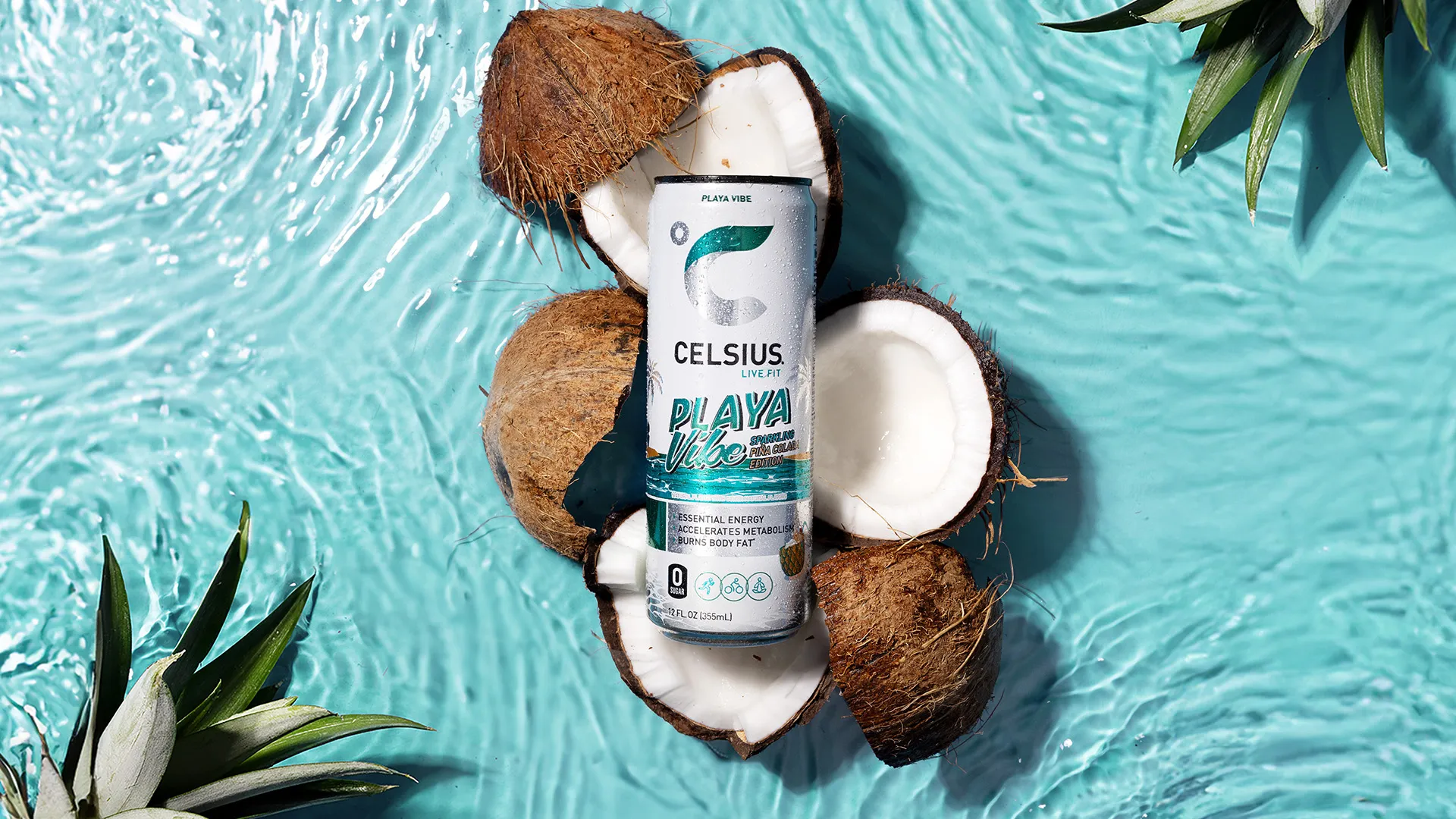
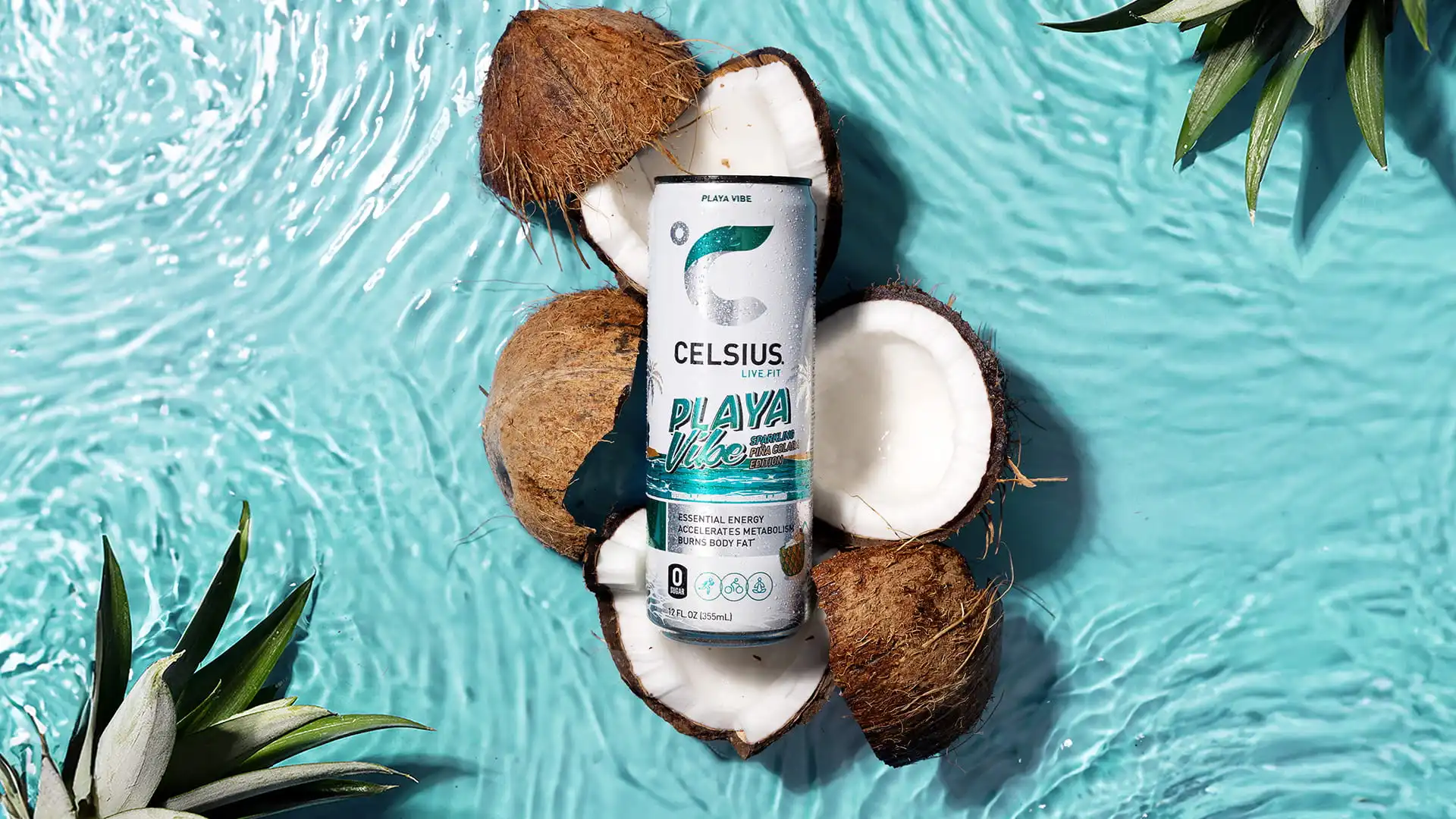
OmniFunnel Marketing's proprietary DeepML technology continuously analyzes attribution patterns across thousands of campaigns, automatically identifying optimization opportunities and reallocating spend in real-time to maximize performance. This dynamic optimization capability enabled Celsius to achieve a 33% increase in product sales within six months, while MSCHF experienced a 140% increase in ROAS within the first year—results that demonstrate the tangible business impact of advanced attribution analytics.
Acquiring new customers costs 5-25 times more than retaining existing customers—a cost differential that becomes unsustainable during economic downturns when efficiency is paramount. Businesses have a 60-70% probability of selling to existing customers versus less than 20% probability with prospects, making retention strategies inherently higher-ROI during uncertainty.
Implement proactive retention programs that increase engagement, demonstrate ongoing value, and address concerns before they escalate to churn. Email nurture sequences highlighting product benefits, personalized recommendations based on usage patterns, loyalty programs that reward continued partnership, and dedicated success resources that ensure customers maximize value from their investment all contribute to retention rates that protect revenue when new acquisition becomes more challenging.
Focus on Customer Lifetime Value (CLV) optimization rather than purely first-purchase metrics. Strategies that increase purchase frequency, expand product adoption, or extend relationship duration multiply the value of every customer acquisition, making your entire marketing funnel more efficient. During recessions, customers who remain engaged and see ongoing value become your most reliable revenue foundation.
Economic uncertainty demands messaging evolution from aspirational to practical, from nice-to-have to essential, from features to measurable outcomes. Consumers and business buyers alike intensify focus on ROI, durability, risk mitigation, and demonstrable value when budgets tighten.
Restructure messaging around three core themes: quantifiable ROI and payback periods that justify investment even in constrained budgets, risk reduction and reliability that provide safety during uncertain times, and operational efficiency and cost savings that help customers navigate their own economic pressures.
Increase emphasis on case studies, testimonials, performance data, and guarantees that reduce perceived purchase risk. Social proof becomes exponentially more valuable during downturns as trust and validation requirements intensify. OmniFunnel Marketing consistently leverages client success stories—MSI's 33% new user growth, documented 10X paid media revenue increases, and CPA reductions from $60 to $38—to demonstrate proven results that justify continued marketing investment even when budgets face scrutiny.
Content marketing delivers 3X more leads per dollar than traditional advertising while building long-term brand authority that compounds over time. During recessions when paid media competition decreases, organic content becomes disproportionately effective at capturing attention and establishing expertise.
Create comprehensive educational resources that help your audience navigate economic challenges: industry analysis, cost optimization guides, strategic frameworks, and practical tools that provide immediate value regardless of purchase decisions. This positions your brand as a trusted advisor rather than merely a vendor, building relationship equity that translates to preference when buying decisions occur.
According to HubSpot's research, 23% of marketers prioritize social media marketing specifically during economic uncertainty, recognizing its cost-efficiency and engagement potential. Over 50% of brands plan to increase creator and influencer partnerships in 2025, with total U.S. brand spending exceeding $10 billion on influencer collaborations—demonstrating sophisticated marketers' recognition that authentic content drives disproportionate results during downturns.
A leaky funnel destroys ROI regardless of how effective your marketing attracts initial interest. During economic uncertainty when every conversion matters exponentially more, customer journey optimization becomes mission-critical.
Audit every conversion point: landing page load speeds, form friction, checkout complexity, mobile experience, trust signals, and call-to-action clarity. Research shows that improving page load time from 5 seconds to 2 seconds can increase conversion rates by 50% or more. Simplifying checkout from five steps to three typically reduces abandonment by 20-30%. These technical optimizations require minimal investment but generate immediate, measurable ROI improvements.
Implement personalization that tailors experiences based on visitor source, behavior patterns, industry, or previous interactions. Generic experiences convert at 2-3%, while sophisticated personalization drives 6-8% conversion rates—the difference between mediocre and exceptional marketing efficiency. OmniFunnel Marketing's 7% average conversion rate versus 2.35% industry benchmarks reflects exactly this optimization discipline applied systematically across the entire customer journey.
When competitors reduce marketing spend, they don't just decrease visibility—they forfeit market position. According to research from Frontify, companies that maintain marketing during recessions can triple their share of voice without increasing absolute spending, simply because competitive messaging volume decreases dramatically.
Reduced advertising competition directly lowers customer acquisition costs. Paid search CPC rates typically decline 15-30% during recessions as advertisers exit auctions. Social media CPM rates drop 20-40% when demand decreases. This creates a rare window where the same budget captures significantly more impressions, clicks, and conversions—if you have the courage to maintain investment while others retreat.
Samsung's strategy during the 2008 recession exemplifies this approach. While competitors slashed budgets, Samsung maintained spending and focused on innovation messaging. Prior to 2008, Samsung ranked 21st in global brand value. Today it ranks 6th—a meteoric rise directly attributable to strategic marketing during economic uncertainty when others went dark.
Conventional wisdom suggests delaying product launches during downturns, yet MIT Sloan research reveals the opposite: new products launched during recessions achieve higher sales, greater market share, and remain on the market longer than those launched during boom times—19% longer for automotive products and 14% longer for fast-moving consumer goods.
This counterintuitive finding reflects multiple dynamics: reduced competitive launches creating clearer positioning, consumers actively seeking better value propositions, and increased receptivity to innovation that solves newly acute problems. Recessions force consumers to reconsider habitual purchases, creating openings for superior alternatives to displace incumbents who become complacent during growth periods.
Economic downturns create buyer's markets for exceptional marketing talent. As companies reduce headcount, skilled professionals with proven track records become available—talent that would be inaccessible during competitive growth periods. Organizations that strategically build capabilities during downturns emerge with superior teams positioned to dominate when markets recover.
Similarly, marketing technology vendors become more flexible on pricing and terms during uncertain periods. Enterprise analytics platforms, automation systems, and AI-powered tools that might be cost-prohibitive during boom times often become accessible with significant discounts or favorable payment structures. Investing in foundational marketing infrastructure during downturns creates compounding advantages that persist long after economic recovery.
The most successful recession strategies don't simply cut marketing—they dramatically improve marketing efficiency while strategically maintaining or even increasing investment in highest-performing areas. McKinsey's research found that winning companies "refocused rather than cut spending," achieving superior results by optimizing operations even as they invested more than competitors in strategic priorities.
Audit marketing operations for inefficiencies: redundant tools providing overlapping functionality, manual processes that could be automated, agencies delivering mediocre performance, creative production workflows with unnecessary steps, and reporting consuming excessive time without driving decisions. Eliminating operational waste can reduce costs 15-25% without sacrificing any marketing effectiveness—providing budget capacity to maintain or increase customer-facing investments.
Marketing automation delivers immediate efficiency improvements by handling repetitive tasks, personalizing communications at scale, and ensuring consistent follow-up without manual intervention. The average marketing automation platform reduces operational costs by 30-40% while simultaneously improving campaign performance through better timing, segmentation, and personalization.
OmniFunnel Marketing's AI-powered automation solutions integrate workflow optimization, predictive analytics, and intelligent decision-making that multiplies team productivity. Businesses implementing our automation frameworks typically see 40% efficiency gains within the first six months—freeing resources to focus on strategic initiatives that drive growth rather than tactical execution consuming time without commensurate impact.
Economic pressure creates opportunities to renegotiate vendor relationships from a position of strength. Audit all marketing vendors, agencies, and technology subscriptions to identify underutilized tools, redundant capabilities, or underperforming partnerships that consume budget without delivering proportional value.
Consider vendor consolidation that reduces complexity, eliminates integration challenges, and often provides volume discounts. Rather than managing ten point solutions, partnering with comprehensive providers that deliver integrated capabilities typically reduces total costs 20-30% while improving coordination and data consistency. OmniFunnel Marketing's integrated approach spanning SEO, PPC, social media, content marketing, and AI-powered analytics provides exactly this consolidation advantage—comprehensive capabilities with unified strategy and measurement.
You cannot optimize what you cannot measure. Real-time performance dashboards providing immediate visibility into campaign performance, channel efficiency, conversion rates, and ROI enable rapid optimization that compounds over time into significant performance advantages.
Effective dashboards surface actionable insights rather than overwhelming with data. Focus on core metrics directly tied to business outcomes: revenue attribution by channel, CAC trends, conversion rate evolution, ROAS performance, and customer retention indicators. Automated alerts flagging performance degradation enable proactive intervention before problems compound into serious budget waste.
Exceptional marketing performance isn't achieved through a single optimization—it's the compounding result of hundreds of incremental improvements systematically implemented over time. Organizations that embed continuous testing into their operational cadence consistently outperform those that set-and-forget campaigns.
Implement structured A/B testing across messaging, creative, targeting, bidding strategies, landing pages, and calls-to-action. Even small improvements—3-5% conversion rate increases, 10% CPC reductions, or 8% engagement improvements—compound across dozens of optimizations into transformational performance differences. The discipline of systematic testing becomes exponentially more valuable during economic uncertainty when every percentage point of efficiency directly impacts sustainability.
Traditional annual budgeting that locks spending allocations for 12 months becomes obsolete in volatile environments. Implement agile budget frameworks that enable monthly or quarterly reallocation based on actual performance data and evolving market conditions.
Establish clear performance thresholds that trigger reallocation: channels exceeding ROAS targets by 20% receive incremental budget increases, while underperforming channels face funding reductions or strategic pivots. This dynamic optimization ensures capital continuously flows to highest-performing opportunities rather than remaining trapped in underperforming legacy allocations because "that's what we've always done."
Advanced organizations implement predictive analytics that forecast performance under various budget scenarios, enabling proactive reallocation before performance degradation occurs. This shifts budget management from reactive to strategic, maximizing ROI through forward-looking optimization rather than backward-looking correction.
Begin with rigorous assessment of current marketing performance, channel efficiency, budget allocation, and measurement capabilities. Document baseline metrics across all channels: current ROAS, CAC, conversion rates, customer retention, and revenue attribution. Identify data gaps preventing comprehensive performance visibility.
Conduct competitive analysis to understand how your share of voice and positioning compare to key competitors. Analyze customer journey data to identify conversion bottlenecks. Audit technology stack for redundancy and gaps. The outcome should be a comprehensive performance snapshot that becomes your baseline for measuring improvement and a prioritized list of optimization opportunities ranked by potential impact.
Implement high-impact, low-complexity optimizations that generate immediate results: eliminate obviously underperforming campaigns, fix technical conversion barriers, consolidate redundant tools, and reallocate budget from lowest-performing to highest-performing channels based on your audit insights.
Simultaneously build analytical foundation required for sophisticated optimization: implement comprehensive tracking, establish attribution modeling, create performance dashboards, and define clear KPIs aligned to business objectives. This foundation enables the data-driven decision-making that drives sustained performance improvement.
Deploy advanced optimization strategies: implement marketing mix modeling, launch predictive analytics initiatives, refine attribution models, and establish agile budget reallocation processes. Begin systematic testing programs that drive continuous improvement.
Refine messaging and positioning for economic environment, emphasizing value, ROI, and risk reduction. Launch retention programs to protect existing customer revenue. Identify strategic opportunities to capture market share from retreating competitors. By day 90, you should have both immediate performance improvements and foundational capabilities that drive sustained competitive advantage through uncertainty and beyond.
Economic uncertainty doesn't change the fundamental reality that business growth requires customer acquisition and retention—it simply changes the context in which these imperatives operate. The research is unambiguous: companies that maintain strategic marketing investments during downturns don't just survive, they systematically outperform both during recessions and in subsequent recovery periods.
The framework outlined in this guide provides a comprehensive approach to protecting ROI while positioning for growth: leverage data-driven budget optimization to maximize efficiency, implement advanced attribution modeling to eliminate waste, prioritize retention economics over pure acquisition, refine messaging for value-conscious buyers, and capitalize on strategic opportunities that only exist when competitors retreat.
The organizations that emerge stronger from economic uncertainty are those that recognize downturns not as threats requiring defensive posture, but as strategic inflection points offering rare opportunities to capture market share, build brand equity, and establish competitive positioning at significantly reduced costs. Your marketing strategy during the next 12 months will determine your market position for the next decade.
OmniFunnel Marketing has guided 1,700+ clients through multiple economic cycles with data-driven strategies, proprietary AI technology, and proven optimization methodologies that consistently deliver industry-leading results. Our DeepML technology, comprehensive analytics capabilities, and performance-focused approach provide the strategic partnership that transforms marketing from cost center to growth driver—especially when economic conditions demand maximum efficiency and measurable outcomes.
The question isn't whether to invest in marketing during economic uncertainty—it's whether you'll invest strategically with data-driven precision, or whether you'll concede market position to competitors who recognize that recession marketing isn't a defensive tactic, but the most offensive growth strategy available.

As a beacon of innovation, we guide your business through the evolving digital landscape with cutting-edge solutions.

Our steadfast reliability anchors your strategic endeavors, ensuring consistent delivery and performance.

We harness state-of-the-art technology to provide smart, scalable solutions for your digital challenges.

Our extensive experience in the digital domain translates into a rich tapestry of success for your brand.

Upholding the highest standards of digital security, we protect your business interests with unwavering vigilance.

We offer a stable platform in the tumultuous digital market, ensuring your brand's enduring presence and growth.
OmniFunnel Marketing has garnered notable recognition from a range of prestigious media outlets. This acknowledgment from leading publications not only underscores our expertise in the digital marketing realm but also highlights our commitment to delivering exceptional marketing strategies. Our presence in these prominent media sources is a testament to the trust and value we bring to our clients, elevating their marketing efforts to new heights.





As a beacon of innovation, we guide your business through the evolving digital landscape with cutting-edge solutions.
Our steadfast reliability anchors your strategic endeavors, ensuring consistent delivery and performance.
We harness state-of-the-art technology to provide smart, scalable solutions for your digital challenges.
Our extensive experience in the digital domain translates into a rich tapestry of success for your brand.
Upholding the highest standards of digital security, we protect your business interests with unwavering vigilance.
We offer a stable platform in the tumultuous digital market, ensuring your brand's enduring presence and growth.

Experienced Senior Teams
Profit-First Strategy & Consulting
Channel-Specific Paid Media
Tracking & Attribution Specialists
Conversion Rate Optimization (CRO)
In-House Developers
In-House Creative Production
Proprietary First-Party Data Priming
Full-Funnel Feedback Loops
AI Voice Agents & Automated
AI Content Engine
MCP + LLM Real-Time Optimization
Value-Based Bidding & ROI
Installed CMO Leadership
You Own All Assets






Our talented team brings 20+ years of expertise and passion.

Michael Tate, CEO and Co-Founder of OmniFunnel Marketing, is a pioneering leader in leveraging AI and machine learning (ML) technologies to revolutionize digital marketing. With over 20 years of expertise in new media sales, Michael has distinguished himself as an SEO/SEM specialist, adept at integrating AI-driven strategies to enhance paid performance marketing. Since January 2016, he has been instrumental in transforming OmniFunnel Marketing into a hub of innovation, particularly in the legal and medical sectors. His philosophy, “more visibility without more expenditure,” is brought to life through AI-powered marketing tools, offering small and medium-sized firms a competitive edge.
His role involves not just client engagement but also orchestrating AI and ML tools to optimize marketing strategies for ROI maximization. Michael's expertise in AI-driven data analysis and workflow automation enables businesses to achieve unprecedented productivity and efficiency, ensuring robust online presence and profitability.
.webp)
Former foreign policy advisor turned digital marketing and communications consultant, Kalinda's extensive professional journey spans nearly two decades across both public and private sectors. Her expertise lies in strategic and creative marketing strategy, as well as communications management for businesses, associations, and government agencies. Having lived and worked globally, she has had the privilege of assisting businesses—both in the US and abroad—achieve their goals through impactful social media campaigns, community building, outreach, brand recognition, press relations, and corporate communication.
Kalinda's passion lies in cultivating meaningful relationships among stakeholders while building lasting digital brands. Her signature approach involves delving into each client’s unique needs and objectives from the outset, providing highly customized, bespoke service based on their needs. From political leaders to multi-unit restaurant concepts and multi-million dollar brands, Kalinda has successfully guided a diverse range of clients reach and exceed their digital marketing, public relations, and sales goals.

OmniFunnel Marketing's Director of Search Marketing, brings close to 15 years of digital marketing experience to leading the agency's paid media strategy. A dedicated Google Ads specialist at his core, Juan's command extends across Meta, TikTok, and Amazon, with a primary focus on ecommerce and an equally sharp discipline in lead generation. He has built and scaled campaigns across virtually every vertical, from local service businesses to national, multi-market accounts, and his leadership has been central to establishing paid media as one of OmniFunnel's most consistent growth engines.
What separates Juan's work is the conviction that campaigns are only as good as the signal beneath them. Before a dollar scales, he pressure tests the full measurement layer, tracking architecture, event design, and the quality of the conversion data flowing back to each platform, and he operates daily inside attribution platforms like Triple Whale and Northbeam, reconciling what Meta, Google, TikTok, and Amazon each claim against what the business actually banked. That foundation powers the fundamentals that move results: precise account structure, disciplined budget management, and relentless, data-driven testing and optimization, increasingly paired with AI-powered tools to sharpen targeting and surface insights faster. The combination lets OmniFunnel Marketing scale client accounts sustainably, growing spend and revenue in tandem while delivering measurable, lasting business growth.

Camila is a pioneering digital marketing leader who began shaping influencer strategy before it became an industry standard, partnering with mega brands like H&M, Universal Music, FabFitFun, FoxyBae, and Amika to name a few. An early adopter and entrepreneur, she evolved from affiliate manager to blogger to 7-figure ecommerce brand founder, and later accelerated growth for an innovative Silicon Valley software startup redefining personal health data ownership and user empowerment. Along the way, she played a pivotal role in educating leading global agencies, including Starcom, Ogilvy, and Universal McCann, on the power of influencer marketing in its formative years.
At OmniFunnel Marketing, Camila leads creative across every major social platform, Meta, Instagram, TikTok, YouTube, and beyond, carrying concepts from insight through finished production, often in front of the camera herself. She owns the full customer lifecycle as well, with expert command of email and SMS automation inside platforms like Klaviyo, building the flows, segmentation, and campaigns that turn first purchases into durable repeat revenue. With deep expertise in customer acquisition, scalable strategy, and trend forecasting, Camila bridges the gap between people and brands, aligning KPIs with market realities while delivering measurable growth. She remains at the forefront of digital innovation, integrating the power of AI with human insight to fuel growth, relevance, and long-term brand value.

Emma Harris, Chief Operating Officer (COO) of OmniFunnel Marketing, Emma plays a pivotal role in steering the operational direction and strategy of the agency. Her responsibilities are multi-faceted, encompassing various aspects of the agency's operations.
Emma utilizes her extensive operational experience to lead and oversee the agency's day-to-day operations. She is responsible for developing and implementing operational strategies that align with the agency's long-term goals and objectives. Her strategic mindset enables her to foresee market trends and adapt operational strategies accordingly, ensuring the agency remains agile and competitive.

Joseph Pagan, OmniFunnel Marketing's Director of Design & Development, is a visionary in integrating AI and ML into creative design and web development. His belief in the synergy of UI/UX, coding, and AI technologies has been pivotal in advancing OmniFunnel's design and development frontiers. Joseph has led his department in leveraging AI and workflow automation to create websites that are not only aesthetically pleasing but highly functional and intuitive
His approach involves using advanced AI tools to streamline web development processes, ensuring adherence to top-notch coding standards and design guidelines. This leads to enhanced efficiency, accuracy, and client satisfaction. Joseph's extensive experience across different design and development domains, combined with his proficiency in AI and ML, empowers OmniFunnel Marketing to deliver cutting-edge, user-centric digital solutions that drive business growth and customer engagement.

Sarah Martinez, as the Marketing Manager at OmniFunnel Marketing, holds a crucial role in shaping and executing the marketing strategies of the agency. Her responsibilities are diverse and impactful, directly influencing the brand's growth and presence in the market.
Sarah is responsible for crafting and overseeing the execution of marketing campaigns. This involves understanding the agency's objectives, identifying target audiences, and developing strategies that effectively communicate the brand's message. She ensures that each campaign is innovative, aligns with the agency's goals, and resonates with the intended audience.
Discover Success Stories from OmniFunnel's Diverse Portfolio.
Dive into the narratives of our clients who have embraced OmniFunnel's AI-driven marketing solutions to monumental success. Their experiences underscore our commitment to harnessing artificial intelligence for strategic marketing that not only reaches but resonates with target audiences, fostering robust engagement and exceptional growth.
Kevin Stranahan
Jane Martinez
David Butler
Discover Success Stories from OmniFunnel's Diverse Portfolio.
Dive into the narratives of our clients who have embraced OmniFunnel's AI-driven marketing solutions to monumental success. Their experiences underscore our commitment to harnessing artificial intelligence for strategic marketing that not only reaches but resonates with target audiences, fostering robust engagement and exceptional growth.
"OFM's expertise in eCommerce marketing is unparalleled. They optimized our PPC campaigns, revamping our ad spend to yield an astounding ROI. If you're looking to make waves in the digital world, look no further than OFM."
Kevin Stranahan
"Transparency and innovation are at the core of OFM’s services. Their monthly reports are comprehensive, and their readiness to adapt and innovate is remarkable. We've finally found a digital marketing agency we can trust for the long haul."
Jane Martinez
"OmniFunnel's AI solutions have exceeded our expectations and delivered outstanding results."
David Butler
Discover Success Stories from OmniFunnel's Diverse Portfolio.
Dive into the narratives of our clients who have embraced OmniFunnel's AI-driven marketing solutions to monumental success. Their experiences underscore our commitment to harnessing artificial intelligence for strategic marketing that not only reaches but resonates with target audiences, fostering robust engagement and exceptional growth.
"OFM's expertise in eCommerce marketing is unparalleled. They optimized our PPC campaigns, revamping our ad spend to yield an astounding ROI. If you're looking to make waves in the digital world, look no further than OFM."
Kevin Stranahan
"Transparency and innovation are at the core of OFM’s services. Their monthly reports are comprehensive, and their readiness to adapt and innovate is remarkable. We've finally found a digital marketing agency we can trust for the long haul."
Jane Martinez
"OmniFunnel's AI solutions have exceeded our expectations and delivered outstanding results."
David Butler
At OmniFunnel Marketing, we pride ourselves on being a beacon of innovation and excellence in the digital marketing world. As an award-winning agency, we are celebrated for our pioneering strategies and creative ingenuity across the digital landscape. Our expertise is not confined to a single aspect of digital marketing; rather, it encompasses a full spectrum of services, from SEO and PPC to social media and content marketing. Each campaign we undertake is an opportunity to demonstrate our skill in driving transformative results, making us a trusted partner for businesses seeking to navigate and excel in the complex digital arena. Our holistic approach ensures that every facet of digital marketing is leveraged to elevate your brand, engage your audience, and achieve outstanding growth and success



.webp)









Ready to level up your online game? Call (844) 200-6112 or dive into the form below.